In a world where education is increasingly recognized as the cornerstone of personal and professional development, the role of educational grants emerges as a pivotal force. These grants, often perceived as mere financial assistance, are in fact powerful catalysts for transformative change. They not only alleviate the financial burdens associated with higher education but also open a gateway to a world of untapped potential and opportunities.
This article will delve deep into the essence of educational grants, unraveling their profound impact not just on the recipients but on the fabric of society itself. We will explore how these grants are not just about providing financial relief but about fueling dreams, ambitions, and the drive for academic and professional excellence.
As we embark on this exploration, we’ll shed light on the multi-faceted role of educational grants. From breaking down economic barriers that hinder access to education, to fostering an environment of equal opportunities – these grants are instrumental in shaping the futures of aspiring minds. Our journey will traverse the lasting effects of these grants on the career trajectories of students and their ripple effect on societal advancement.
The Transformative Power of Educational Grants: Unlocking Doors to Opportunity
Breaking Financial Barriers
The financial challenges of pursuing higher education are formidable, often deterring talented individuals from diverse economic backgrounds. Educational grants step in as a beacon of hope, breaking these financial barriers. They democratize access to education, ensuring that the potential for learning and growth is not restrained by economic constraints. By providing this critical financial support, grants empower students to pursue their academic ambitions without the burden of financial stress.
Long-Term Benefits for Recipients
The impact of receiving an educational grant extends far beyond the immediate relief from financial strain. It sets in motion a journey of growth and opportunities, influencing the recipient’s career path and life choices. Grant recipients often find themselves in a better position to take strategic decisions about their education and career, leading to more fulfilling professional outcomes. The empowerment that comes with this financial aid often translates into higher academic achievement, career advancement, and, ultimately, a more successful and satisfying life.
Navigating the World of Educational Grants
Finding the Right Grants
Embarking on the journey to find the right educational grants can be both exciting and daunting. Begin by identifying grants that align with your academic goals, career aspirations, and personal circumstances. Use online databases, university financial aid offices, and community organizations as resources. Pay attention to grants that cater to your specific field of study, or those that support students from your demographic background, be it based on geography, cultural heritage, or other unique characteristics.
The Application Process
Applying for educational grants requires a strategic approach. Start by meticulously reading the eligibility criteria and application instructions. Craft a compelling application by clearly articulating your academic achievements, career goals, and the potential impact of the grant on your education. Personalize your application to reflect your unique story and aspirations. Remember, letters of recommendation and personal statements are crucial components of your application, so ensure they are well-crafted and authentic.
Maintaining Grant Eligibility
Securing a grant is just the beginning. Maintaining its eligibility often requires meeting certain academic standards, such as a minimum GPA, or participating in specific activities or programs. Stay informed about the requirements and commit to fulfilling them. Regularly communicate with the grant provider, especially if facing challenges that might affect your eligibility. Proactively seeking advice and support can help you stay on track.
A New Era in Educational Equity: The Pell Grant Expansion
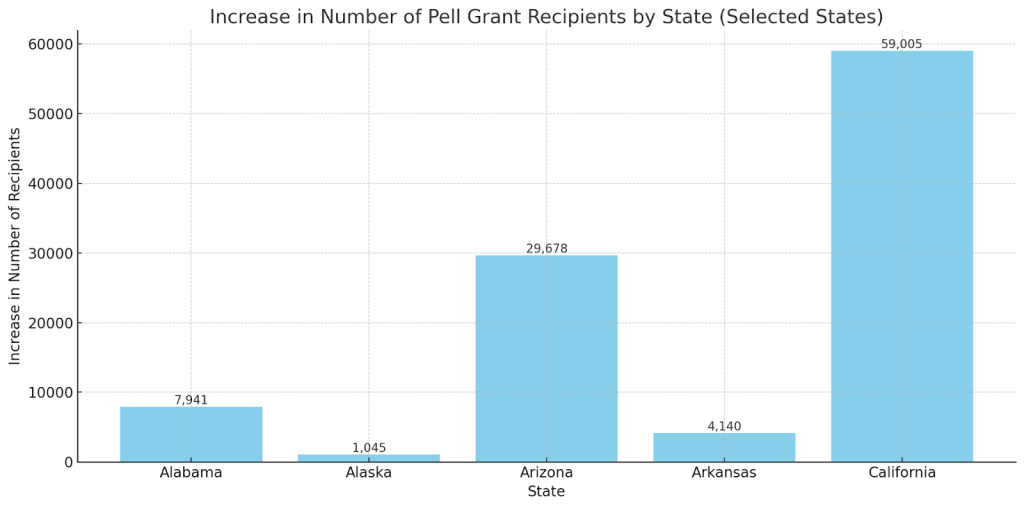
The projected increase in Pell Grant recipients across various U.S. states, as depicted in the bar chart, is a critical development in the realm of educational grants. This anticipated rise, particularly in states like Alabama, Alaska, Arizona, Arkansas, and California, is a direct consequence of the redesigned FAFSA process aimed at simplifying and streamlining financial aid applications.
This expansion represents a significant milestone in the journey towards educational equity. The Pell Grant, traditionally a crucial support for students from lower-income families, is set to reach a wider demographic. By reducing the complexities of the FAFSA application, the U.S. Department of Education is making strides in ensuring that financial constraints do not hinder the academic aspirations of talented individuals.
The graph not only illustrates the quantitative increase in grant recipients but also symbolizes a qualitative leap in educational access. States with traditionally lower college enrollment rates due to financial barriers are poised to witness a transformation. This shift aligns perfectly with the core theme of the article, emphasizing the pivotal role of educational grants in democratizing access to higher education.
In states like California, known for its diverse population and vast economic disparities, the expansion of the Pell Grant can be particularly impactful. It promises to open doors for numerous students who might have otherwise foregone higher education due to financial limitations. This change is expected to have a ripple effect on the overall educational landscape of the state, leading to a more educated workforce and, consequently, a more robust economy.
The expansion of the Pell Grant program is more than a policy change; it’s a beacon of hope for countless students across the United States. It stands as a testament to the transformative power of educational grants, underscoring their role not just in alleviating financial burdens but in shaping the future of the nation’s youth. As we look forward to the 2024-25 academic year, we can anticipate a new era of educational opportunities, one where talent and ambition are nurtured regardless of economic background.
Notable Educational Grants and Their Impact
Grants that Changed Lives
The impact of educational grants can be life-changing. Highlight specific examples of grants that have made a significant difference in the lives of students. Share stories of individuals who, with the help of these grants, have overcome financial barriers, pursued their academic dreams, and achieved remarkable success in their professional and personal lives.
Diverse Fields and Opportunities
Educational grants are not confined to traditional fields of study. There is a wide array of grants available across various disciplines – from STEM to the arts, social sciences to vocational studies. This section showcases the diversity of grants available, highlighting how they cater to a wide range of interests and career paths. This diversity not only illustrates the breadth of opportunities available but also the commitment of grant providers to support varied academic pursuits.
Envisioning a Future with Accessible Education
In the evolving landscape of education, the role of grants has never been more critical. Educational grants are more than just financial aids; they are powerful instruments for shaping the future of education and fostering a more equitable society. As we look ahead, we see a horizon where grants play a pivotal role in democratizing education, providing equal opportunities regardless of socio-economic backgrounds. This section delves into how educational grants are not just changing individual lives but also transforming the educational fabric of society.
Innovations in funding are redefining the accessibility of education. Technology is playing a crucial role, from AI-driven scholarship matching systems to crowdfunding platforms that allow wider community participation in supporting education. Emerging funding models are paving the way for more inclusive and diverse educational environments. We’ll explore these innovations and their implications for the future of education.
Some FAQs Answered On Understanding Educational Grants
How can I find educational grants that I’m eligible for?
Start by researching online databases specifically designed for scholarships and grants. Check with your school’s financial aid office, community organizations, and professional associations related to your field of study. Utilize tools like the U.S. Department of Labor’s scholarship search tool for federal grants.
What’s the difference between a grant, a scholarship, and a loan?
Grants and scholarships are typically ‘gift aid’ that doesn’t need to be repaid. They’re often awarded based on need (grants) or merit (scholarships). Loans, however, are borrowed money that must be repaid with interest.
What are the key components of a successful grant application?
A successful grant application should clearly articulate your academic and career goals, demonstrate financial need, and showcase your achievements. Personal statements and recommendation letters are crucial, as they offer a more personal perspective to your application.
Can educational grants affect my other financial aid?
Yes, receiving a grant can impact the amount of other financial aid you’re eligible for. It’s essential to report any grants to your school’s financial aid office, as they may adjust your aid package to reflect your new financial situation.
Are there grants for non-traditional students or those pursuing continuing education?
Absolutely. Many grants are available for non-traditional students, including adults returning to education, those pursuing continuing education, and individuals changing careers. Research is key to finding these specific opportunities.
In conclusion, we reflect on the transformative role of educational grants in not just shaping individual destinies but also in contributing significantly to societal advancement. These grants are the keystones in building a more knowledgeable, skilled, and equitable world. They are not merely financial supports but crucial investments in our collective future.
This journey through the world of educational grants reiterates their invaluable role in empowering students and fostering a culture where educational equity is not just an ideal but a tangible reality. In closing, we call upon our readers to not only seek out these opportunities but also to advocate for the expansion and accessibility of educational grants. Together, we can sow the seeds of success for generations to come, fostering a world where education is a right, not a privilege, and where every potential is given a chance to flourish.