The landscape of legal education is undergoing a profound transformation, shifting from traditional classroom settings to innovative online platforms. This digital transformation is reshaping how legal concepts are taught and understood, aligning with broader trends in educational technology that emphasize accessibility, flexibility, and interactivity. In an increasingly digital world, these changes are not merely optional but essential for legal education institutions aiming to prepare students for a technologically advanced legal environment. This introduction sets the stage for a detailed exploration of leading online platforms that are at the forefront of this educational revolution, examining their features, the opportunities they present, and the challenges they pose to traditional legal education models.
Evolution of Legal Education
Legal education has traditionally been rooted in lecture-based teaching methodologies, emphasizing rote learning and theoretical knowledge. However, the last few decades have seen a significant shift towards more dynamic and interactive forms of learning. Catalysts for this evolution include the growing demand for more flexible learning environments that can accommodate diverse student needs and schedules, as well as the pressing need to expand access to legal education across the globe, breaking down geographical and socioeconomic barriers.
Digital platforms have emerged as pivotal in meeting these modern educational demands. They offer scalable, accessible, and cost-effective solutions that traditional brick-and-mortar institutions often cannot. Online legal education has enabled universities to reach a wider audience, including international students and working professionals who may not have the means or the time to attend traditional classes. Furthermore, these platforms allow for the rapid updating of course materials, ensuring that legal education keeps pace with fast-changing global laws and practices, thereby providing students with up-to-date knowledge and skills relevant to the current legal landscape.
Leading Online Platforms in Legal Studies
In the realm of legal studies, several online platforms have established themselves as leaders, transforming how legal knowledge is disseminated and acquired. Prominent among these are Coursera and edX, which collaborate with top universities and law schools around the world to offer a wide range of legal courses and degrees. These platforms provide everything from introductory courses on constitutional law to specialized programs in intellectual property law, cybersecurity law, and more.
Moreover, bespoke platforms developed by leading law schools such as Harvard’s online learning portal extend specialized legal education beyond their campuses, making high-caliber legal instruction accessible worldwide. These collaborations between traditional law schools and cutting-edge technology companies enrich the content and delivery of legal education, making learning more engaging and effective. By leveraging the strengths of both academia and technology, these platforms deliver a robust educational experience that is both broad in reach and deep in quality.
Features and Technologies Driving Innovation
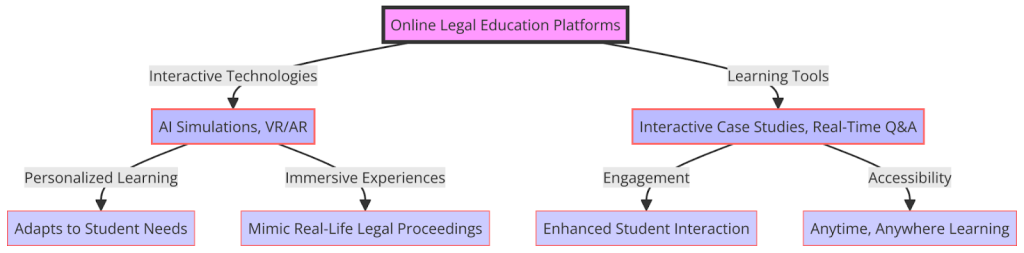
The success of online legal platforms is largely due to the innovative features and technologies they employ to enhance the learning experience. These platforms utilize a variety of tools to create interactive and user-friendly educational environments. For instance, interactive case studies allow students to apply legal principles in simulated environments, enhancing their analytical and decision-making skills. Real-time Q&A sessions enable direct engagement with instructors, fostering a more interactive and responsive learning environment.
Advanced technologies such as AI-driven legal simulations offer personalized learning experiences, adapting in real-time to meet the individual needs of each student. Furthermore, the integration of virtual reality (VR) and augmented reality (AR) technologies has begun to revolutionize legal training by providing students with immersive experiences that closely mimic real-life legal proceedings and negotiations. These technologies not only make learning more engaging but also more practically relevant, preparing students for the realities of modern legal practice.
Benefits of Online Legal Education
Online legal education brings a multitude of benefits that significantly enhance the learning experience and accessibility for students across the globe. The primary advantage is increased accessibility; students from various geographical locations can access quality legal education without the need to relocate or commute, which often involves significant financial and personal costs. This feature is particularly beneficial for international students and those residing in remote areas who wish to pursue legal studies without the barriers of physical distance and high tuition fees.
Flexibility in learning pace and style is another significant benefit. Online platforms allow students to tailor their study schedules around personal and professional commitments, making legal education feasible for working professionals and those with caregiving responsibilities. Moreover, the ability to quickly update course content is crucial in a field like law, where statutes and regulations can change rapidly. Online platforms can seamlessly integrate the latest legal developments into the curriculum, ensuring that the education provided is current and relevant.
Furthermore, online education platforms contribute to democratizing legal education by making it more affordable. Reduced costs related to physical infrastructure and the ability to scale up efficiently allow these platforms to offer courses at a fraction of the cost of traditional legal education. This aspect opens doors for a more diverse group of students, including those who may not have considered a legal career due to financial constraints.
Challenges and Criticisms
Despite its benefits, online legal education faces several challenges and criticisms that must be carefully managed to ensure its effectiveness. One major concern is the adequacy of online formats in developing critical legal skills such as argumentation and negotiation. These skills are traditionally honed through face-to-face interactions and moot court exercises, which can be challenging to replicate in a virtual environment.
Credential recognition is another significant challenge, as some jurisdictions and legal sectors may not fully recognize qualifications obtained online, affecting graduates’ eligibility to practice law. Moreover, the digital divide remains a critical issue; not all students have access to reliable internet and modern computer equipment, which are prerequisites for participating in online education.
Addressing these challenges involves innovative solutions and proactive measures by educational institutions and platform providers. For instance, many are adopting blended learning models that combine online coursework with periodic in-person sessions, which help mimic the interactive nature of traditional classrooms. Interactive webinars and real-time discussions facilitated by advanced communication tools also help enrich the learning experience and develop interpersonal skills critical in legal practice.
In conclusion, the digital transformation of legal studies through online platforms represents a significant evolution in legal education, reflecting broader trends in higher education and technology use. While these platforms offer numerous benefits such as increased accessibility, flexibility, and cost-efficiency, they also present challenges that need to be addressed to fully realize their potential.
As we reflect on the transformative impact and future trajectory of legal education, it is clear that while online platforms will continue to play a critical role, they must be integrated thoughtfully with traditional teaching methods to maintain the rigorous standards essential for the legal profession. Stakeholders in legal education should adopt a balanced view, recognizing the vast potential of online legal education to broaden the scope of legal training, while also working diligently to overcome its limitations.
Moving forward, the continued evolution of legal education will depend on the ability to merge innovative digital solutions with the foundational elements of traditional legal training. This balanced approach will ensure that the next generation of legal professionals is well-equipped to meet the challenges of a diverse and dynamic legal landscape.