Private grants stand as a crucial pillar in the landscape of educational funding, offering a beacon of hope to scholars who face the daunting challenge of financing their academic journeys. These grants, sourced from private foundations, philanthropic organizations, and individuals, are designed to support students who demonstrate exceptional promise, academic excellence, or financial need. In an era where the cost of education continues to rise at an alarming rate, the importance of private grants cannot be overstated. They provide a lifeline to students, enabling them to pursue higher education without the burden of insurmountable debt.
The challenges in education financing today are multifaceted. Students and families grapple with tuition fees that outpace inflation, alongside the costs of books, living expenses, and other academic necessities. In this context, private grants emerge as a critical resource, offering financial assistance that does not require repayment, unlike student loans. This support is essential for ensuring that education remains accessible to all, regardless of economic background.
This article aims to shed light on the significant impact of private grants on the educational landscape. It will guide readers through the process of identifying and securing these grants, highlighting their role in bridging the financial gap and promoting educational equity. By exploring the transformative effect of private grants on both individuals and the educational system, this article seeks to inform and inspire readers to leverage these opportunities to achieve their academic and professional goals.
The Role of Private Grants in Education
Bridging the Financial Gap
Private grants play a pivotal role in mitigating the financial challenges faced by students in today’s educational landscape. As the cost of higher education continues to escalate, many students find themselves in a precarious position, caught between their academic aspirations and their financial realities. Private grants offer a viable solution to this dilemma, providing essential funding that can cover tuition fees, books, research projects, and other educational expenses. By filling the financial void left by rising education costs and limited public funding, these grants ensure that students can focus on their studies without the constant worry of financial strain. This support is invaluable, as it not only alleviates immediate financial burdens but also reduces the long-term impact of student debt, enabling graduates to embark on their professional journeys with greater financial freedom.
Promoting Educational Equity
Beyond their financial benefits, private grants are instrumental in promoting educational equity. By offering support based on merit, financial need, or specific criteria such as field of study, background, or personal circumstances, these grants help level the playing field for students from diverse backgrounds. This is particularly important in an educational system where access to opportunities can be unevenly distributed. Private grants recognize and address these disparities, providing a pathway for talented and motivated students who might otherwise be excluded due to socio-economic barriers. Through this targeted support, private grants contribute to creating a more inclusive and diverse academic environment. This diversity enriches the educational experience for all students, fostering a broader understanding of different perspectives and encouraging a culture of inclusivity within educational institutions.
Private grants serve as a vital support system within the educational landscape, addressing both the financial challenges of higher education and the need for greater equity and diversity. By offering financial assistance and promoting inclusivity, these grants ensure that education remains accessible to a wide range of students, thereby enriching the academic community and empowering individuals to achieve their full potential.
How to Secure Private Grants: A Step-by-Step Guide
Securing private grants is a strategic process that requires careful planning, research, and execution. These grants are invaluable resources for students seeking financial support for their education, providing a foundation upon which they can build their academic and professional futures. Below is a detailed guide to navigating the complex landscape of private grants.
Identifying Grant Opportunities
The first step in securing a private grant is to identify the opportunities that align with your educational needs and goals. This process involves diligent research and a keen understanding of where to look.
Research Strategies
Effective research is paramount in uncovering the wealth of private grant opportunities available. Start by exploring the websites of foundations, organizations, and institutions dedicated to educational funding. Many of these entities have specific missions or areas of focus, such as supporting students in particular fields of study, those from certain geographic regions, or individuals with unique backgrounds or challenges. Utilizing academic databases and search engines tailored to scholarships and grants can also streamline the search process, allowing you to filter opportunities based on your eligibility and specific criteria.
Networking and Resources
Networking plays a critical role in identifying private grant opportunities. Engage with academic advisors, professors, and professionals within your field of interest who can provide insights and recommendations on potential funding sources. Attending educational forums, workshops, and seminars is another effective way to connect with organizations and individuals who share your academic interests and may be aware of grant opportunities. Additionally, leveraging online resources, such as social media groups and academic forums, can provide valuable leads and advice on securing private grants.
Application Process
Navigating the application process for private grants requires attention to detail and a strategic approach to presenting your case as compellingly as possible.
Preparing Your Application
A successful grant application begins with understanding the grantor’s requirements and tailoring your application to meet these criteria. This includes crafting a personal statement or project proposal that clearly articulates your educational goals, how the grant will support these objectives, and why you are a deserving candidate. Be sure to highlight your academic achievements, extracurricular activities, and any relevant experiences that demonstrate your commitment and potential. Providing a clear, concise narrative of your journey and aspirations will resonate with grantors and set your application apart.
Meeting Deadlines and Requirements
Organization is key to ensuring that your application is submitted on time and in compliance with all requirements. Create a checklist of required materials, such as transcripts, letters of recommendation, essays, and project proposals, and set internal deadlines to complete each component well in advance of the actual submission deadline. Pay close attention to the details of the application process, including formatting guidelines, word count limits, and submission methods, to avoid any disqualifying errors.
Philanthropic Contributions: Catalyzing Educational Recovery in 2024
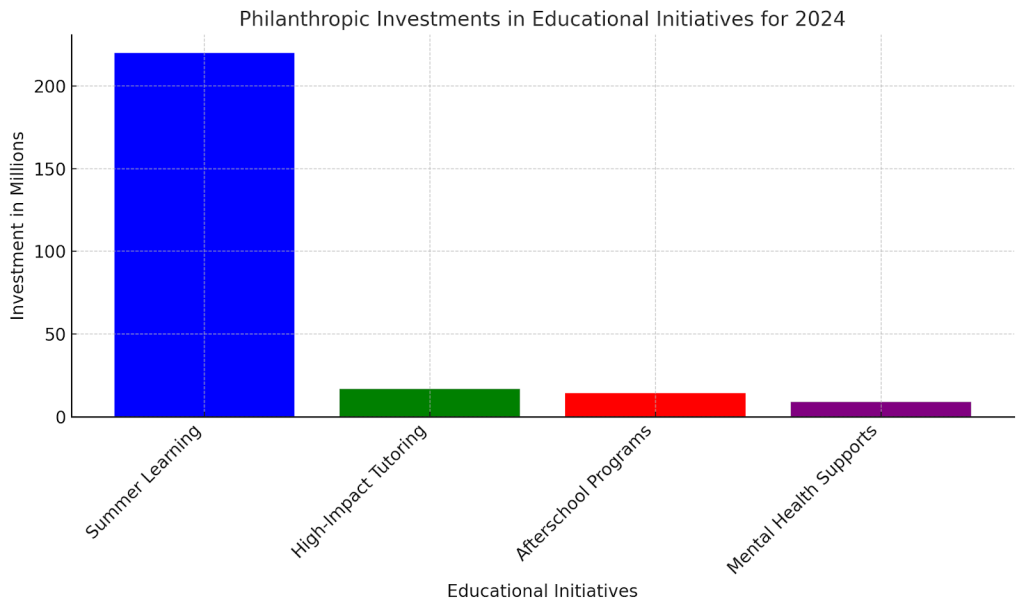
The bar chart above succinctly illustrates the philanthropic community’s targeted investments in educational initiatives for the year 2024. These contributions are pivotal in addressing the compounded challenges that have emerged in the wake of the global pandemic, particularly in the educational sector. The distribution of funds across various initiatives reflects a strategic approach to support and enhance student recovery, academic growth, and mental well-being.
Summer Learning: The lion’s share of the investments, amounting to $220 million, underscores the significance of summer learning programs. These initiatives are crucial for mitigating learning loss and preparing students for the academic year ahead, ensuring that the summer months are a time of continued learning and enrichment rather than stagnation.
High-Impact Tutoring: With a $17 million investment, high-impact tutoring programs are recognized for their effectiveness in personalized learning and academic acceleration. This funding aims to scale tutoring efforts nationwide, making one-on-one academic support accessible to students who need it the most.
Afterschool Programs: The allocation of $14.4 million towards afterschool programs highlights the role these initiatives play in providing students with safe, engaging, and educational environments post-school hours. These programs are vital in supporting working families and ensuring that students have productive outlets for learning and development outside the classroom.
Mental Health Supports: An investment of $9 million in mental health supports acknowledges the critical need for comprehensive wellness programs within schools. This funding is dedicated to expanding access to mental health services, addressing the emotional and psychological impacts of the pandemic on students, and fostering environments where students can thrive both academically and personally.
The strategic philanthropic investments depicted in the bar chart are not merely financial contributions; they represent a broader commitment to the holistic recovery and advancement of the educational sector. By focusing on areas critical for student success—summer learning, tutoring, afterschool engagement, and mental health—philanthropic organizations are playing a pivotal role in shaping a resilient, inclusive, and equitable educational landscape for 2024 and beyond. This concerted effort underscores the power of targeted investments in catalyzing positive change and setting the foundation for a brighter future in education.
Enhancing Education Through Private Grants
Private grants are more than just financial lifelines; they are catalysts for innovation and personal development within the educational sphere.
Innovation and Research Funding
Private grants play a crucial role in fostering innovation by supporting research projects and initiatives that push the boundaries of academic inquiry. These grants enable students and researchers to explore uncharted territories, investigate complex issues, and develop new technologies and solutions that can have far-reaching impacts. By providing the necessary funding for cutting-edge research, private grants contribute to the advancement of knowledge and the betterment of society.
Long-term Impact on Career Paths
The support from private grants can significantly influence individuals’ career trajectories, opening doors to opportunities that might otherwise be inaccessible. With the financial freedom to pursue specialized fields of study, recipients of private grants can explore their passions and interests without the constraints of economic limitations. This empowerment allows scholars to venture into niche areas of research, undertake innovative projects, and ultimately establish themselves in careers that align with their academic pursuits and personal values. The impact of private grants extends beyond the immediate benefit of financial support, shaping the future of industries and professions by nurturing the next generation of leaders, thinkers, and innovators.
FAQs: Navigating the World of Private Grants
Who is Eligible for Private Grants?
Eligibility for private grants varies widely depending on the specific objectives and criteria set by the grant-giving entity. Generally, private grants are open to individuals pursuing educational opportunities, research projects, or specific academic pursuits. These grants may target students of certain disciplines, demographic groups, or those demonstrating particular academic or personal achievements. It’s essential to carefully review the eligibility requirements for each grant to determine if it aligns with your academic background, career aspirations, and personal circumstances.
How Do Private Grants Differ from Scholarships and Public Grants?
Private grants, scholarships, and public grants all aim to provide financial support for education, but they differ in their sources, criteria, and application processes. Private grants are typically funded by non-governmental organizations, foundations, and individuals, focusing on specific areas of interest or need. Scholarships are often merit-based and can come from both private and public sources, awarded to students based on academic achievements, talents, or other criteria. Public grants are government-funded and usually need-based, aiming to support students who require financial aid to pursue their education. Each type of financial support has its unique application process and eligibility criteria.
What Are the Typical Requirements for Applying for a Private Grant?
The requirements for applying for a private grant can include academic transcripts, letters of recommendation, personal statements, and project proposals. Many grantors seek applicants who demonstrate a strong commitment to their field of study, community engagement, and the potential for significant contributions to their discipline. Specific requirements may also involve financial need documentation, essays on predetermined topics, or detailed plans for how the grant funds will be used. Thoroughly understanding and adhering to these requirements is crucial for a successful application.
Can Private Grants Be Used for International Study?
Yes, many private grants are available for students pursuing studies abroad or international research projects. These grants aim to support cross-cultural exchange, global education, and the development of international expertise in various fields. Applicants interested in international study should look for grants specifically designed to fund education or research in a foreign country and ensure they meet any additional requirements for international applicants.
How Can I Make My Grant Application Stand Out?
To make your grant application stand out, focus on clearly articulating your academic and professional goals, demonstrating how the grant will help you achieve these objectives. Tailor your application to align with the grantor’s mission and values, highlighting your unique experiences, achievements, and the potential impact of your proposed study or project. A well-crafted personal statement that tells a compelling story about your journey and aspirations can make a strong impression. Additionally, ensuring that your application is complete, well-organized, and free of errors reflects your dedication and attention to detail.
In Conclusion
Private grants play an indispensable role in the world of education, offering crucial financial support that empowers students to pursue their academic and professional dreams. By bridging financial gaps, promoting educational equity, and fostering innovation, private grants contribute significantly to the development of a diverse and dynamic academic landscape. This guide has illuminated the path to identifying and securing these vital resources, underscoring the importance of meticulous research, strategic application, and a deep understanding of the grantors’ objectives. As you embark on your journey to secure private grants, remember their transformative potential not just for your educational pursuits but also for your future career and contributions to your field. Actively seeking and applying for private grants can be a game-changer in your academic and professional trajectory, opening doors to unparalleled opportunities for growth and achievement.